

The Recruiting Landscape
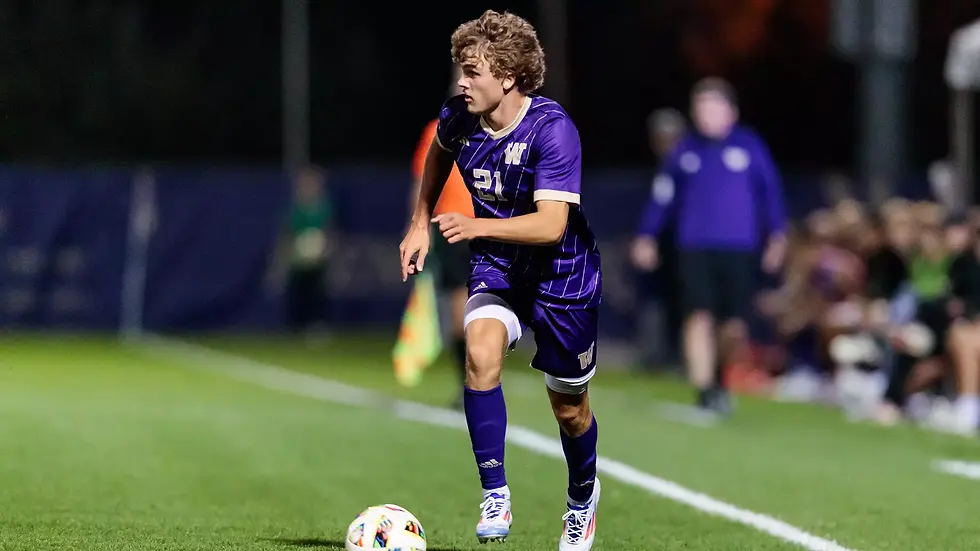
Recruiting has changed rapidly in recent years. New roster rules, changes to eligibility and a recruiting pool that includes international players and college transfers are reshaping how programs build their teams.
Zach Ramsey, Eastside FC Alumnus,
Current Washington Husky and First-Round MLS Draft Pick
You’re playing at a good club. You’ve put in years of work. Maybe you’re starting to picture yourself wearing a college jersey.
For aspiring Eastside FC players, understanding those changes is part of preparing for your opportunity.
The path takes work. It also continues to produce meaningful possibilities. Eastside FC players have gone on to college soccer, professional academies and professional opportunities. Their journeys offer perspective on what can happen through development, persistence and finding the right environment.
A large player pool.
Limited roster spots.
Hundreds of thousands of students play high school soccer in the United States. A much smaller number compete at NCAA schools.
NCAA participation estimates
Boys / Men. Girls / Women
High school soccer participants484,908393,048
NCAA soccer participants28,74631,200
Estimated high school-to-NCAA participation5.9%7.9%
Estimated high school-to-Division I participation1.4%2.8%
These NCAA figures use 2024–25 participation data. They describe the national landscape, rather than your personal chances, and exclude NAIA and junior college opportunities. College totals include existing players across class years—not just openings for incoming recruits.
Prepare consistently and explore multiple programs. A search focused on only a few familiar schools leaves you with fewer ways to find a strong fit.

Percent of high school soccer players who go on to play in the NCAA, all levels.
5.9%
of Boys
7.9%
of Girls
Eastside FC players go on to play at all levels of college soccer

Broaden your definition of success.
Addison Martinez played on Eastside’s GU04 ECNL team. Now she plays soccer at Williams College, one of top-ranked institutions in the country.

Addison Martinez, Eastside FC G04 ECNL
Williams College
Roster and eligibility rules affect opportunities.
At Division I schools covered by the House settlement rules, men’s and women’s soccer have a roster limit of 28, with exemptions for certain designated student-athletes. That is a total roster limit, not 28 new openings each year.
Eligibility rules also influence how long players can remain on a roster. The NCAA’s new age-based model provides up to five years of eligibility in Divisions I and II, subject to enrollment timing and other requirements. It applies to new college entrants from fall 2027, with transition provisions for earlier entrants.
What this means for you: Ask each program about its actual recruiting needs. A roster page or graduating class alone will not tell you how many opportunities are available.

Your competition is broader than just the ECNL and ECNL RL.
You're competing for college spots with more than the players you face on weekends. Coaches also recruit players from across the country, professional academies and overseas, plus transfers who already have college experience. Keep developing your game and explore a range of schools where you could contribute.
Jude Larbi | Former Eastside FC B11 ECNL
player who joined the Philadelphia Union Academy